
A few specific kinds of gear cause the real injuries: chews too hard to dent under your thumbnail, toys small enough to swallow or to lodge in the throat, and collars that tighten on the neck or carry prongs or shock. A hard chew fractures or wears down teeth, and that usually ends in an extraction. A swallowed piece can block the intestine or the airway the same day, while a collar that tightens can cause cervical spinal pain or flare tracheal collapse in a dog who already has it. Prongs and shock leave punctures and burns, and they do lasting behavioral damage, because pain added to fear deepens the fear instead of changing the behavior.
The rope toy that goes everywhere with your dog has been shedding strands for weeks, and it is still in the basket because nothing else gets picked. Village Animal Hospital in Wichita sends families home from every appointment knowing what we found and the signs to watch for, and a wellness exam is a good moment to have us look over the gear your dog uses every day. Our AAHA-accredited hospital can X-ray a dog who has swallowed part of a toy, give a cracked tooth the dental care it needs, and talk through training without a prong or shock collar. Request a visit if something your dog wears or chews has you uneasy, and if a piece has already gone down, call us right away.
Dog Toys, Chews, and Collars: The Basics
- A toy your dog can't fit all the way into their mouth, in a material with some give, is the safer buy. Anything that slips behind the back teeth can go down whole.
- Real bones, antlers, hooves, and hard nylon are harder than tooth enamel, and a fractured tooth usually ends in an extraction.
- Prong, choke, and shock collars carry physical and behavioral risks at once, while reward-based training is safer and works better.
- The gear that suits one dog can hurt another, so match the collar and the chew to your own dog's size, how hard they chew, and how they behave on a leash.
Which Toys Are Most Likely to Hurt Your Dog?
Toys hurt dogs in two ways. They come apart and get swallowed, or they're too stiff to flex and a tooth takes the force instead. Size and material are the deciding factors.
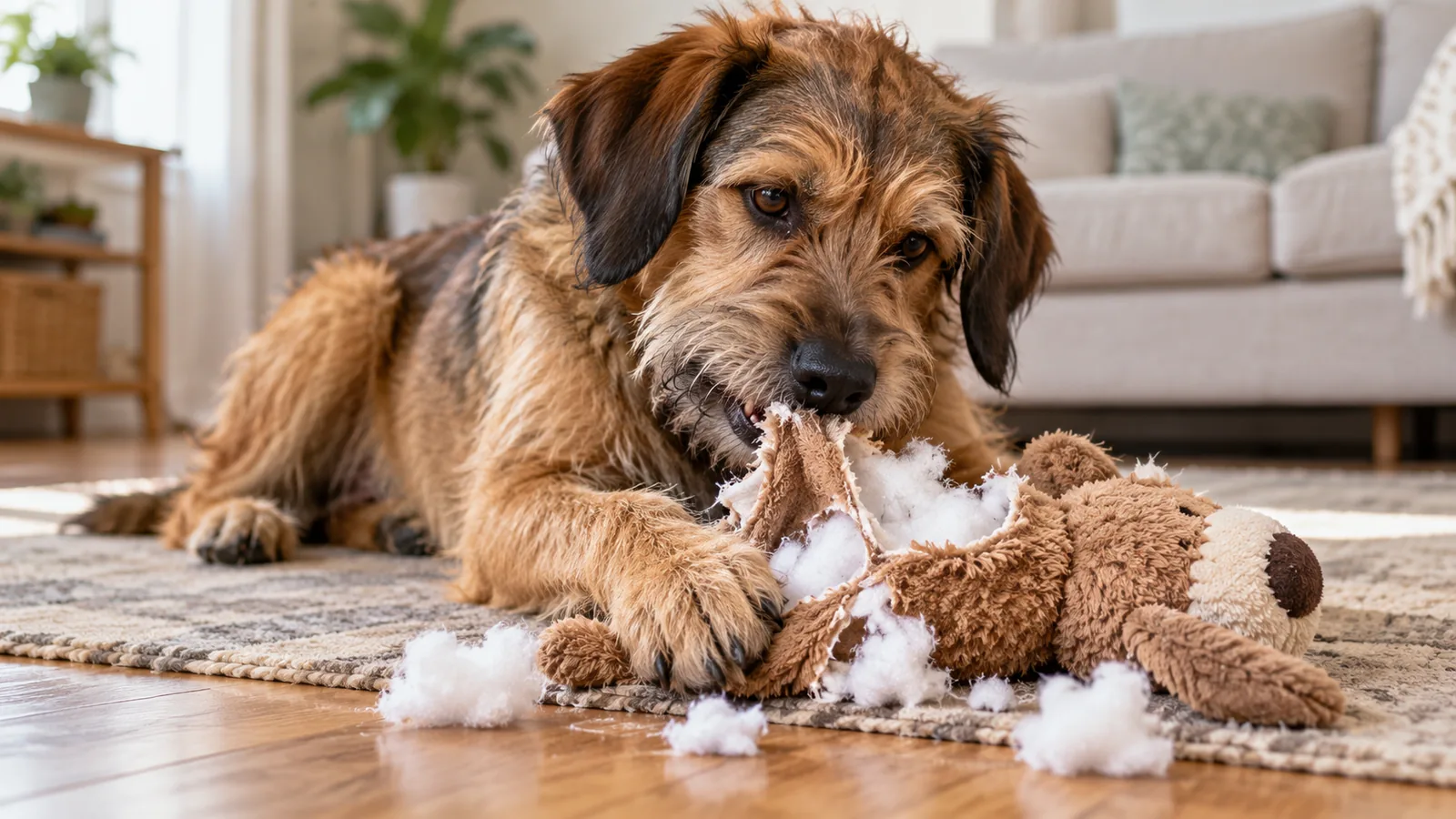
Swallowed toy pieces become gastrointestinal foreign bodies, which run from a day of vomiting to a blockage that cuts off the blood supply to a loop of intestine. Chewed-off rope strands are among the worst, because they saw through the gut wall as it contracts. A blockage that won't pass needs surgery to remove the obstruction, and that's a same-day conversation. A toy stuck in the airway is a different emergency: if your dog is gagging, pawing at the mouth, or struggling to breathe, look in the mouth, pull out anything you can get hold of without pushing it deeper, and come straight in. Never make your dog vomit at home unless we've told you to, because a sharp edge or a strand that slid down without trouble can injure the throat and esophagus on the way back up.
- Rope and stuffed toys: a hard chewer strips strands off the rope and pulls the filling out of the plush. Swallowed stuffing can pack together and obstruct the gut.
- Squeaker toys: once the seam opens, an exposed squeaker is a choking hazard.
- Undersized balls and toys: anything that fits behind the back teeth can go down whole or wedge in the throat.
- Hard plastic toys: stiff enough to crack a tooth when a determined chewer bears down.
- Tennis balls and other abrasive toys: the rough felt sands enamel down toward the softer dentin underneath over months of fetch.
Swap worn toys out before they fragment, and watch a new one until you know how your dog treats it.
Which Chews Are Hard Enough to Break a Tooth?
Chewing is healthy, and the chew you hand over decides whether it's safe. Real bones, antlers, hooves, and hard nylon are the hardest chews for dogs' teeth, and the damage isn't always a dramatic break. The large upper chewing tooth, called the carnassial, takes the hit most often, and a fracture that reaches the pulp almost always ends in an extraction. Years of grinding on something that won't give can instead wear a tooth down until the pulp is exposed, which sets up a tooth root abscess, a pocket of infection at the root that needs treatment of its own.
| Chew | The injury we see |
| Real bones, cooked or raw | One of the most common culprits behind a broken carnassial |
| Rawhide | Turns gummy and wads up, and that wad can stick in the esophagus or block the gut |
| Antlers and hooves | Shears a slab off the side of a premolar, which many families only notice when the dog shifts chewing to the other side |
| Hard nylon bones | Splinters into sharp shards that scrape the gut lining |
| A chew gnawed down to a stub | Now the size that goes down whole and lodges in the throat |
What usually brings a family in:
- A tooth that has changed color, snapped, or sits at an odd angle.
- Tips ground flat with a dark dot in the center.
- Gums that bleed.
- A dog who walks away from dinner, drools, or paws at their face.
- Breath that got much worse all at once.
- Vomiting, or a sudden change in appetite.
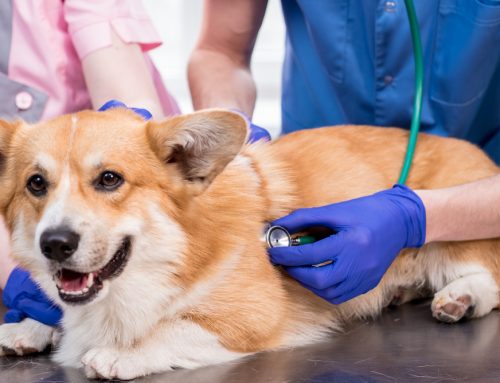
A fractured tooth doesn't heal on its own, and we go through the mouth one tooth at a time at every visit to find one. Digital X-rays settle what the outside can't show, because a crown can look close to normal while the root underneath is cracked and the tissue around it is inflamed. Dental treatment or extraction follows from what those images show. When a young adult dog snaps a tooth, the chance of saving the pulp drops quickly in the days afterward, so a chip is worth a call that week rather than a month of watching.
Which Chews and Toys Can a Dog Have Safely?
One check sorts most of the chew aisle. Try to press a mark into the chew with your fingernail, and if nothing gives, it's harder than your dog's teeth. That rules out bones, antlers, and hooves. Collagen-based chews and rawhide alternatives are safer picks than rawhide or bone.
A chew carrying the Veterinary Oral Health Council seal has shown measurable plaque or tartar control in testing, which is a far narrower claim than the dental wording printed on most packaging.
On the toy side, a few categories keep a heavy chewer busy without asking much of their teeth:
- Food-stuffed rubber toys: filled and frozen, they last a long time with no hard surface to bite through.
- Puzzle feeders and snuffle mats: burn energy through sniffing and problem-solving instead of biting.
- Treat-dispensing toys: good at the right size, and too risky once they're small enough to swallow.
Bring the brand you're eyeing to your next appointment, or ask us which chews hold up for a dog who destroys everything.
Can Destructive Chewing Be a Sign of Illness?
A dog who never touched the furniture and suddenly starts may just be bored, but new destructive chewing can also come from pain, cognitive change in an older dog, anxiety after a household upheaval, or metabolic disease shifting appetite and behavior. Some dogs chew hard for relief, and a sore tooth is a common reason. Before we treat a new chewing habit as purely behavioral, we start with an exam, bloodwork, and imaging to rule out a medical driver, because a training plan built on top of untreated pain doesn't hold.
What Does Your Dog Do When a Collar or Harness Hurts?
Dogs tell you with their face and posture long before a sore forms. Lip licking, yawning, whale eye with the whites showing, a stiff freeze, a tucked tail, and pinned ears are the canine body language of a dog who wants out of the situation, and they show up as the harness goes on, days before a rub mark does. Some dogs simply leave the room when the leash comes off the hook. Discomfort that's already doing damage looks more physical:
- Pawing at the collar or harness: scratching at the same spot every time it goes on.
- Coughing or hacking on walks: pressure landing on the windpipe instead of the chest.
- Redness or hair loss where the gear rests: friction wearing through coat and then skin.
- Limping after a walk: a strap catching a leg or shoulder for the whole outing.
- Flinching when you touch the spot: soreness under the place the equipment sat.
A raw patch under a harness strap needs more than new equipment if it has turned into an infection, and a swab read under our microscope tells us whether bacteria or yeast are involved. When you bring your dog in, we feel along the throat and the skin where the gear sits and check how freely the neck moves.
Which Training Collars and Leashes Should You Avoid?
Three collars turn up again and again in dogs hurt by their own gear: prong collars, choke chains, and shock collars. The dangers of training collars start with how they work, applying pain or pressure until the dog stops. Retractable leashes belong on the list too, for different reasons.
| Gear | How it works | What it risks |
| Prong collar | Closes on the neck when the leash snaps tight, so your dog gets pain instead of information | Concentrates pressure on the windpipe, which one hard lunge can damage, and on the neck and spine, the skin under the prongs, and the thyroid gland beneath |
| Choke chain | Closes around the throat with every pull on the leash | The same pressure on the windpipe, neck, and spine, with the least margin of all in a dog who already has tracheal collapse or disc disease |
| Shock collar, sold as an e-collar or a stimulation collar | Delivers a jolt through contact points pressed against the neck | Burns the skin it presses into, and these aversive training methods raise stress rather than lowering it |
| Retractable leash | Pays out cord the moment a dog leans into it, so pulling is what gets rewarded | Thin cord cuts hands and legs, burns skin on contact, and snaps when a big dog hits the end at speed, and your dog is twenty feet away at the second you need them close |
Tracheal collapse means the cartilage rings of the windpipe have softened and flatten when breathing gets hard, and small breeds are most affected. If your dog coughs, gags, or seems sore in the neck after hitting the end of a leash, call our Wichita hospital, since we handle urgent care during business hours.
A shock collar is a poor fit for a frightened dog whatever the box calls it. A dog who feels pain in a frightening moment learns that the frightening thing predicts pain, so the behavior the collar was bought to fix often gets worse. What tends to follow:
- Deeper fear of whatever came just before the jolt.
- Aggression, as your dog ties the hurt to the passing jogger rather than their own barking.
- Anxiety that spreads to the yard, the street, and the leash itself.
What Walking Gear Keeps Pressure Off Your Dog's Throat?
Gear that moves the pull point off the neck is what keeps pressure off the throat, and that's the whole idea behind head halters and harnesses. A head halter only helps after a slow, patient introduction, and the right pick still depends on your dog's build.
| Gear | Best fit | How it helps |
| Front-clip harness | A dog who pulls | Turns the dog back toward you when the leash tightens, with the load on the chest |
| Head halter | A strong, determined puller | Steers from the head once your dog has been eased into wearing it |
| Back-clip harness | A dog who already walks politely | Keeps the throat clear, with nothing that tightens |
| Martingale collar | Whippets, Greyhounds, and other narrow-headed dogs | Closes just enough to stop a dog slipping out, and no further when sized correctly |
| Flat collar | Carrying ID tags day to day | Holds the tags, but shouldn't take the force of a puller, and a loose one can catch on a crate or another dog's jaw during rough play |
A fixed four to six foot leash gives the steady contact that walking nicely on a leash is built on. A fifteen to thirty foot long line covers recall practice in open space, with no retractor mechanism to fail. Bring the harness to your next appointment and we'll check the fit before you head back out to Riverside Park in Wichita.
Why Does Reward-Based Training Work Better Than a Correction Collar?
Reward-based training pays the behavior you want instead of punishing the one you don't, so the new habit holds without any tool that can hurt a dog's throat, neck, or spine. Slack in the leash earns a small treat, and pulling earns a pause and nothing else. A prong collar can quiet the lunging by making it hurt while the stress that drove your dog forward goes untouched, so the old habit returns the moment the collar does.
Fear-based behaviors are where this makes the biggest difference. A dog who barks and lunges at the end of the leash is showing leash reactivity, which is usually due to anxiety, frustration, or fear of whatever they see.
- With positive reinforcement training, it improves with practice at a distance where your dog can still take food. The moment they notice the trigger and look back at you, they get a treat, and over many repetitions the fear fades toward neutral.
- With an aversive tool like a prong or shock collar, you or the collar causes pain when they react. That adds more negativity to an already bad situation, and can add more anxiety the next time they see the trigger.
If you're stuck, our doctors can talk through behavioral counseling and what a realistic plan looks like for your household.
What Families Ask Us About Toys and Chews
What should we do if our dog swallows part of a toy?
Call us right away, even if your dog seems fine, and tell us if they're vomiting repeatedly, can't keep water down, or have gone quiet and off their food. While a piece is still in the stomach it can sometimes be retrieved or watched, and once it moves on into the intestine, the conversation usually turns to surgery. Don't try to make your dog vomit, don't pull on a strand hanging out of the mouth or the rear, and bring the rest of the toy with you so we know the size and shape we're looking for.
How do I know if a toy is the right size?
Hold it next to your dog's muzzle. If the whole thing disappears into the mouth, it's too small, and no part of it should be able to break off and go down whole. Squeeze it, twist the seams, and pull on anything glued on to see what comes free. Puppies outgrow toy sizes faster than families expect, so size up as the mouth grows, and retire anything chewed down small, even a favorite.
Can puppies have the same chews as adult dogs?
Puppies need to chew, especially while the adult teeth are coming in, but baby teeth are thin and break easily, so a chew that's too hard for a grown dog is far too hard for a puppy. Soft rubber toys, food-stuffed toys, and chews with some give are the right category, and bones, antlers, and hooves are not. A broken baby tooth still needs a look, since the root can get infected before it ever falls out.
Bring the Toy Basket With You to Your Next Visit
Bring the collar, the leash, and a photo of the toy basket to your next wellness visit at Village Animal Hospital in Wichita, and we'll go through all of it with you. Most of what hurts a dog in a toy basket is easy to spot once you know what you're looking for. If something in there worries you sooner, we’re here for emergencies during our normal hours.